
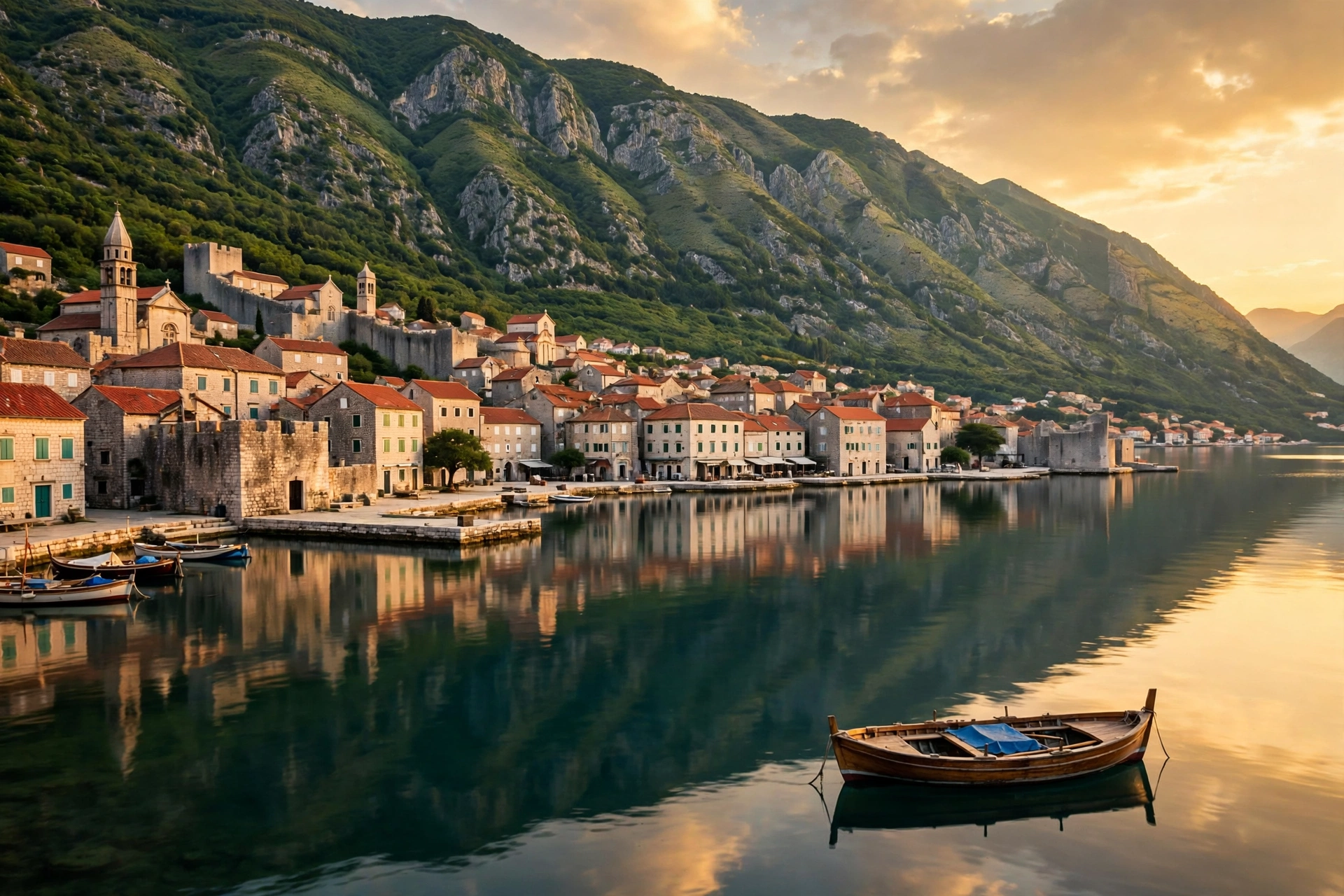
Montenegro on a Budget: Kotor, Budva and the Bay Without the Croatia Price Tag
Yes, you can do Montenegro on a budget, and you can do it properly. I ate well, swam in clear water and slept in clean rooms close to the old towns, and I spent far less than friends who did the same trip across the border in Croatia. Montenegro gives you the same Adriatic light, the same stone lanes and the same mountain backed bays, with prices that still feel like a normal holiday rather than a luxury one.
Key points
- A careful traveller can enjoy Montenegro for about 50 to 70 euros a day, including a room, food and local transport.

- Kotor rewards early mornings and slow wandering, while Budva rewards beach days and evening walks around the old town walls.

- Buses between the coastal towns cost a few euros, so you do not need a car for the classic coastal route.

- Stay just outside the busiest squares, eat where locals eat, and swim at public beaches to save the most.
Why Montenegro on a budget works right now
Montenegro sits on the Adriatic coast between Croatia and Albania, and it uses the euro, which makes costs easy to read for UK and European travellers. The country is small, so you waste very little time or money moving between places. A bus ride along the coast often costs less than a coffee back home, and the views from the window beat most paid tours I have taken.
Search interest in Montenegro has grown while many larger destinations have cooled, yet the coast still runs on family guesthouses, bakeries and small restaurants rather than only big resorts. That mix keeps prices honest, especially in May, June, September and early October, when the sea stays warm enough to swim. I paid for location and food, and I skipped extras that add cost without adding memory.
What a day in Montenegro really costs
Costs below reflect typical 2026 prices for a careful traveller. Prices rise in August and fall sharply outside summer, so treat the ranges as planning figures, not promises.
| Daily cost | Budget range in euros | What you get |
|---|---|---|
| Room | 30 to 55 | A private room in a guesthouse or small apartment, often with a kitchen corner |
| Food and drink | 15 to 30 | Bakery breakfast, a market lunch, and a simple restaurant dinner with a local drink |
| Local transport | 3 to 10 | Coastal buses, short walks, and the occasional shared local taxi |
| Swimming and sights | 0 to 12 | Free public beaches, old town wandering, and one paid viewpoint or museum |
| Total per day | 50 to 70 | A full, comfortable day on the coast, before flights |
If you share a room, your per person cost drops fast. Use the daily travel budget tool to test your own mix before you book, because a small change in your room choice moves the whole daily total more than any single meal does. For flights, check both Tivat and Podgorica, add the transfer cost, and only then call a flight cheap. Tivat sits close to Kotor and Budva, while Podgorica often costs less to fly into but needs a bus to the coast.
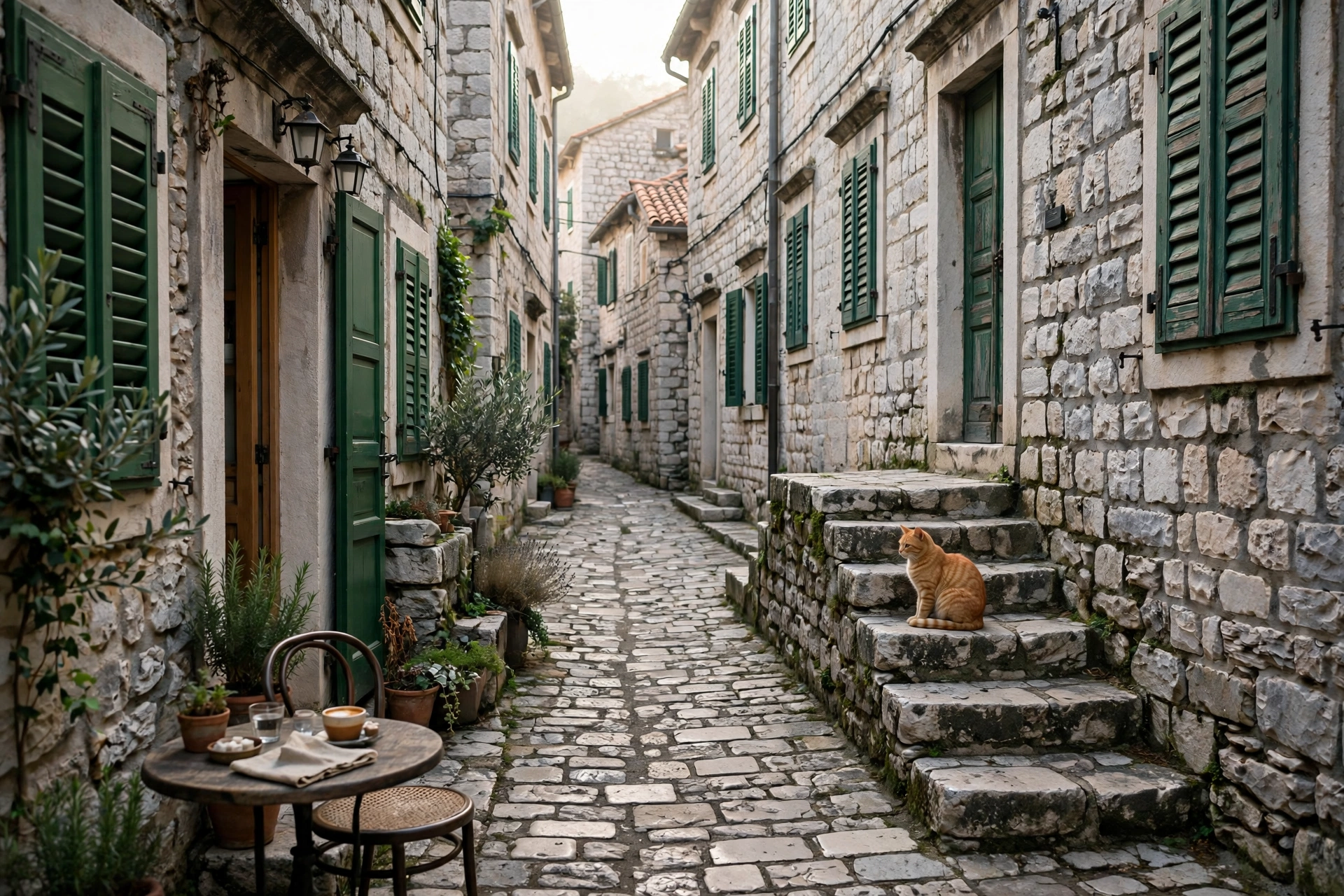
Kotor and the Bay without the cruise crowds
Kotor is the town that made me slow down. The old town sits inside stone walls at the end of a deep bay, with grey mountains rising straight out of the water behind it. Cruise ships dock in the bay on busy days, and the lanes fill up fast around midday. Stay near the old town, rise early, and have the lanes almost to yourself before breakfast.
Start with a morning walk through the main gate and into the squares, and look for the cats that locals care for openly. Climb the fortress steps above the town if your knees allow it. The climb takes about an hour up and down at a gentle pace, and the view over the red roofs and the bay pays for every step. Bring water, wear proper shoes, and go early or late in the day when the stone stays cooler.
Perast makes a perfect half day from Kotor. This tiny town sits further along the bay, with a calm waterfront made for a long lunch, and a local bus costs a few euros each way. I took the bus in the morning, walked the waterfront, ate grilled squid at a family restaurant, and returned to Kotor in time for an evening swim. For a longer route, the three week Balkans itinerary shows how Kotor fits into a wider trip, and the Balkan bus loop explains the overland connections that keep transport costs low.
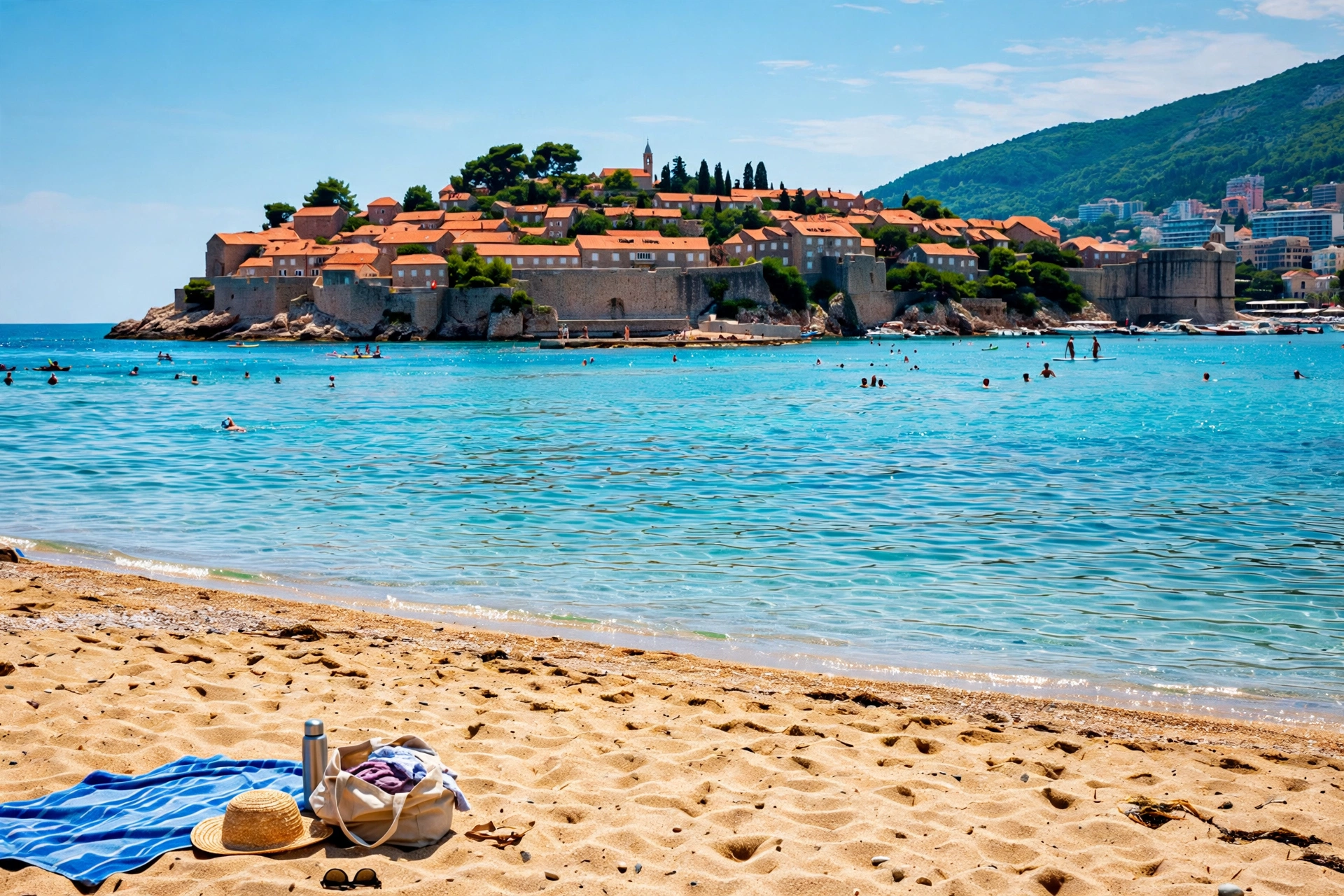
Budva without the party price tag
Budva has a louder reputation than Kotor, and it earns it in July and August, when beach clubs and bars fill up. Visit outside those weeks, or simply choose your base with care, and Budva turns into a very easy budget town. The old town sits on a small peninsula, with stone walls you can walk, narrow lanes full of small restaurants, and a citadel with a view over the whole bay.
I based myself a short walk from the old town rather than right on the main beach strip. That one choice cut my room price and gave me quieter nights, while the beach stayed a ten minute walk away. Mogren beach, just west of the old town, gives you clear water and a proper swimming spot without a long trip. Both Mogren and Slovenska beaches are public, so you can bring your own towel and water and skip the sunbed fee entirely.
Evenings in Budva work best on foot. Walk the old town walls as the light softens, stop for an ice cream, then eat away from the waterfront tables that charge for the view. A short lane inland often serves the same grilled fish or pasta for several euros less. Budva also makes a good base for day trips. Sveti Stefan sits a short bus ride south, and you can admire it from the public beach viewpoint without paying to stay there.
A simple 5 day Montenegro budget route
This route keeps you on the coast, limits hotel changes, and uses buses throughout. Sleep in Kotor for days 1 and 2. Spend day one in the old town and on the fortress climb, and day two on the Perast bus trip and an evening swim. Move to Budva by bus for days 3 to 5. Spend one day on the old town and Mogren beach, one day on a Sveti Stefan viewpoint trip and a long beach afternoon, and one day exploring Herceg Novi or simply resting.
Money saving tips that actually work in Montenegro
- Book a room with a kitchen corner and cook breakfast and one simple dinner. Markets sell bread, cheese, tomatoes, fruit and local wine at fair prices.

- Carry some cash in euros. Cards work in most hotels and larger restaurants, but small buses, market stalls and family guesthouses often prefer cash.

- Drink local wine and local beer. Imported drinks carry a premium, while Montenegrin wine costs far less and tastes excellent with grilled food.

- Walk the old towns early and late. The best light and the quietest lanes arrive outside the midday cruise and tour rush.

- Check official visitor information before you travel. The Montenegro tourism board publishes practical guidance that helps you separate current facts from old blog posts.
FAQ: Montenegro on a budget
Is Montenegro cheap compared with Croatia?
Yes, in most direct comparisons. Rooms, restaurant meals and local transport usually cost less in Montenegro than in Dubrovnik or Split, and public beaches cost nothing. Croatia still offers more choice at the top end, but Montenegro wins clearly on a daily budget.
How much money do I need for a week in Montenegro?
Plan for about 350 to 490 euros per person for a week on the coast, excluding flights, if you stay in guesthouses, eat simply and use buses. A couple sharing a room often spends less per person. Add a buffer for one boat trip and one special dinner.
Do I need a car in Montenegro?
No, not for the classic coastal route. Buses connect Kotor, Perast, Budva and Herceg Novi, and the old towns reward walking. A car helps for remote mountain roads, so rent one for a day or two only if you head inland.
When is the cheapest time to visit Montenegro?
May, June, September and early October give the best balance of price, weather and calm towns. August brings the highest room prices and the busiest beaches. Winter brings the lowest prices, but many coastal restaurants close and swimming stops.
Is Montenegro safe for solo travellers?
I felt safe walking the old towns in the evening and using buses in the daytime, and Montenegro suits solo travel well. Use normal care with valuables in busy lanes, agree taxi prices before you ride, and keep your passport and cards safe when you swim.