

No, you do not need ETIAS to travel to Europe from the UK in late 2026, and you should not pay anyone who claims to sell you one. The European Union has not launched the European Travel Information and Authorisation System yet, and in October 2026 officials dropped the planned launch date from their public pages. That short answer saves you money and stress. This guide explains what ETIAS will be, what has changed, what you do need right now, and how to spot scam sites that already charge for a product that does not exist.
Key points
- ETIAS is not live yet. No UK traveller needs one for a trip in 2026.
- When it launches, it will cost 7 euros and last three years, or until your passport expires, whichever comes first.
- ETIAS is not a visa. It is a pre travel authorisation for visa free travellers, and it does not replace your passport.
- The live border change right now is the Entry Exit System, not ETIAS.
- Never pay a third party site for ETIAS today. The only official route will be the EU site, and it is not open yet
What ETIAS is, in plain English
ETIAS stands for the European Travel Information and Authorisation System. Think of it as a short online check before you travel, similar in spirit to the system the United States uses for visa free visitors. You will fill in a form with your passport details, your travel plans, and a few security questions. In most cases the system will approve the application within minutes. A small number will need manual review and can take longer, so the official advice will be to apply well before you book anything non refundable.
ETIAS will apply to UK passport holders travelling to the Schengen area for a short stay, including tourism, business trips, and visits to family and friends. It will not cover long stays, work, or study. If you plan to stay longer than 90 days in any 180 day period, or you plan to work in Europe, you need the right visa or permit for that country. The fee, as published by the EU, is 7 euros. Travellers under 18 and over 70 will not pay the fee, although they will still need an authorisation. Once approved, it links to your passport and stays valid for three years, or until that passport expires. Renew your passport and you will need a new ETIAS, because it follows the passport number, not the person alone.
Why the launch date disappeared in October 2026
ETIAS was due to launch in the last quarter of 2026. Then, in October 2026, the launch date vanished from official EU pages, and travel industry bodies confirmed that no launch date now stands. Any site that tells you ETIAS is mandatory right now is wrong, and the timeline has slipped into 2027, although the EU has not yet announced a replacement date.
ETIAS is not EES, and the difference matters at the border
Many travellers confuse ETIAS with EES, and scam sites profit from that confusion. EES, the Entry Exit System, is the system that is actually live now. It records your entry and exit digitally when you cross an external Schengen border, using your passport data plus a facial image and fingerprints on your first crossing. Those details stay on file for three years, so later crossings should run faster.
ETIAS, by contrast, is a check you complete before you travel. EES happens at the border. ETIAS happens at home, online, before you leave. When ETIAS launches, you will need both. Right now, you only face EES at the border, plus the normal passport and 90 day rules that already applied after Brexit. If you want to plan around the 90 day rule, use our Schengen 90/180 day calculator before you book. It counts days across past and planned trips and shows how many days you have left in your rolling 180 day window.
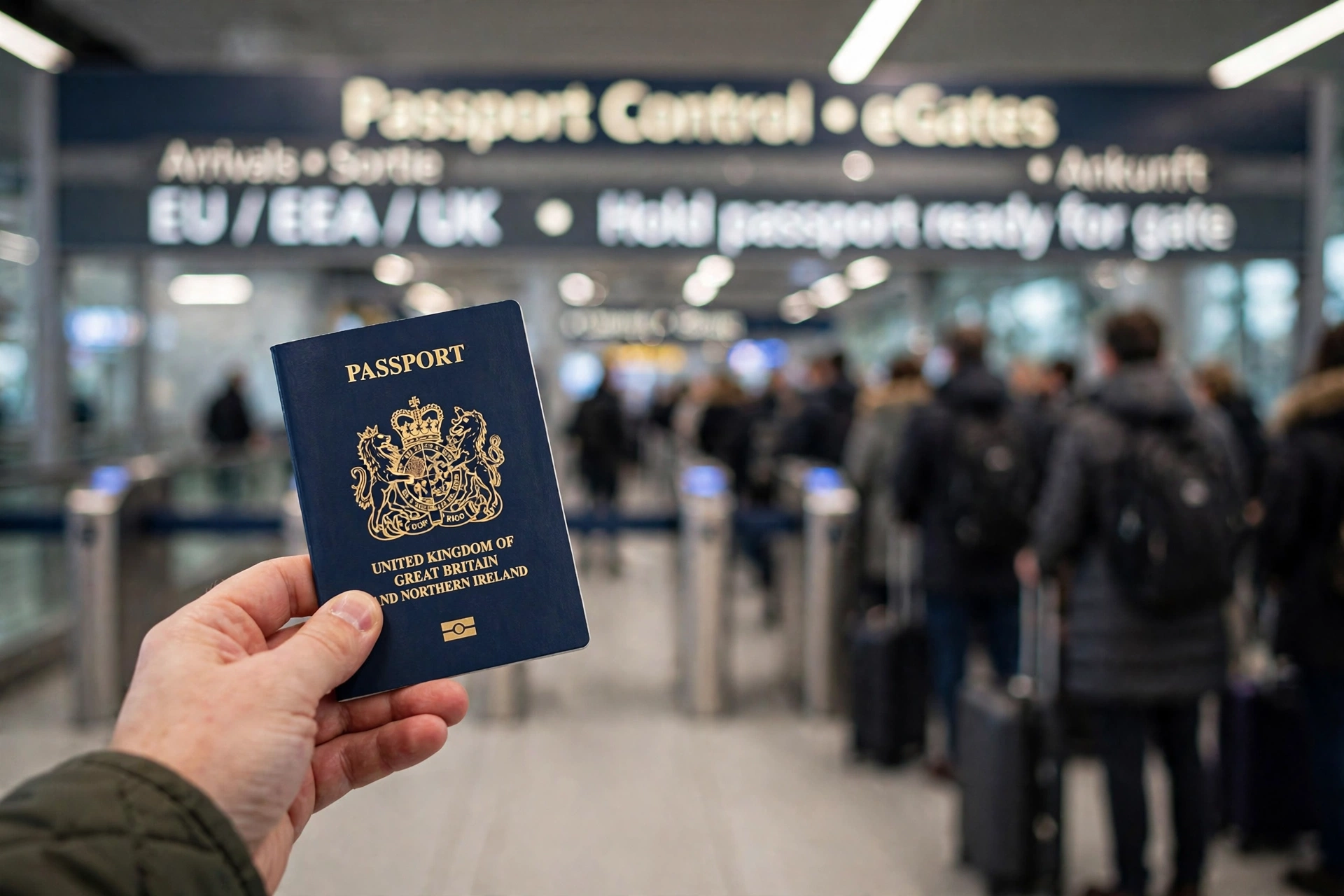
What you do need for Europe right now
You still need a valid passport. Your passport must have been issued within the last ten years on the day you enter the Schengen area, and it must stay valid for at least three months after the day you plan to leave. Check both dates, not just the expiry date printed on the page, because older passports with extra months added can fail the ten year test even when they look valid.
You also need to stay inside the 90 day limit. As a UK visitor, you can spend up to 90 days in the Schengen area in any rolling 180 day period without a visa. The clock counts every Schengen country together, not 90 days per country. A month in Spain plus a month in France plus a month in Italy uses the full allowance. Border officers can ask for proof of your return ticket, your accommodation, and enough money for your stay, so carry those details on your phone or in print.
Travel insurance still matters. Read our guide to travel insurance explained before you rely on a bank account policy, because many policies cap trip length or exclude activities you plan to do.
The ETIAS scam problem, and how to spot it
The Association of British Travel Agents has warned that more than 150 unofficial sites claim to sell ETIAS. UK awareness of the new EU border rules has risen from 41 percent in 2024 to 56 percent in 2026, which creates perfect conditions for scams.
Spot a scam site with four checks. If the site charges you today, walk away, because no official application exists yet. If it uses urgent language about a deadline this month, distrust it, because the EU has set no deadline. If it charges far more than 7 euros, it sells a middleman service at best, and a fake at worst. Check the domain too. The official information lives on the EU travel site at travel europe. If you already paid a scam site, contact your bank about a chargeback and report the site to Action Fraud.
When ETIAS launches, what should you do first
Apply only through the official EU site or app, once the EU confirms they are open, with the passport you will actually travel on. Double check every character of the passport number before you submit. Apply at least a few weeks before departure, even though most approvals should arrive within minutes, because manual reviews can take up to 30 days in rare cases.

A quick checklist for your next Europe trip
- Passport issue date: Issued within the last ten years on entry day
- Passport expiry: Valid for three months after your planned exit
- 90 day count: Total Schengen days in the last 180 days, including past trips
- ETIAS: Not needed yet in late 2026, check the official site before each trip
- EES at the border: Expect a facial scan and fingerprints on your first crossing
- Insurance: Medical cover, trip length, and activities all covered
- Return proof: Return ticket and accommodation details saved on your phone
The bottom line for UK travellers in 2026
You do not need ETIAS yet. You do need a valid passport, a 90 day count you can defend, and travel insurance that actually covers your trip. When ETIAS launches, expect a simple 7 euro online form and a three year validity. Apply only through the official route, apply early, and link it to the passport you travel on.
Frequently asked questions
Do I need ETIAS to travel to Europe from the UK in 2026?
No. ETIAS has not launched yet, and in October 2026 the EU dropped its planned launch date. You need a valid passport and must respect the 90 day rule, but you do not need ETIAS for any trip in 2026.
When will ETIAS launch?
No firm date stands at the time of writing. The EU had planned a launch in the last quarter of 2026, then removed that date in October 2026. Expect a launch in 2027, and check the official EU site before each trip.
How much will ETIAS cost?
The published fee is 7 euros, with no fee for travellers under 18 or over 70. Any site charging far more than that, or charging you today, is not the official route.
What happens if I paid a site for ETIAS already?
Contact your bank about a chargeback, report the site to Action Fraud, and do not rely on any document it sent you. No ETIAS application exists yet.