A tested carry on packing list for trips of one week to three months, with weights, real prices and the airline size rules that catch people out.
I have travelled with hand luggage only for six years, including two winters. It is not about owning clever gear. It is about owning less and washing more often.
This carry on packing list works for a week in Portugal and for three months across Asia, because the list barely changes. What changes is the weather layer and nothing else.
The bag itself
A 40 litre bag that measures 55 by 40 by 20 centimetres fits the cabin allowance on most full service airlines. Budget carriers are stricter. Ryanair allows 55 by 40 by 20 only with priority boarding, otherwise 40 by 20 by 25. Wizz Air is similar. EasyJet allows 45 by 36 by 20 free.
Check the exact numbers for your airline the day you book, not the day you fly. A gate bag fee is £45 to £60 and they weigh and measure at the gate far more than they used to.
Buy a bag with a clamshell opening rather than a top loader. You will repack twenty times on a long trip and a top loader means unpacking everything to reach socks.
Clothes
Five days of clothing is enough for any length of trip. Beyond five days you are carrying a laundry problem, not a wardrobe.
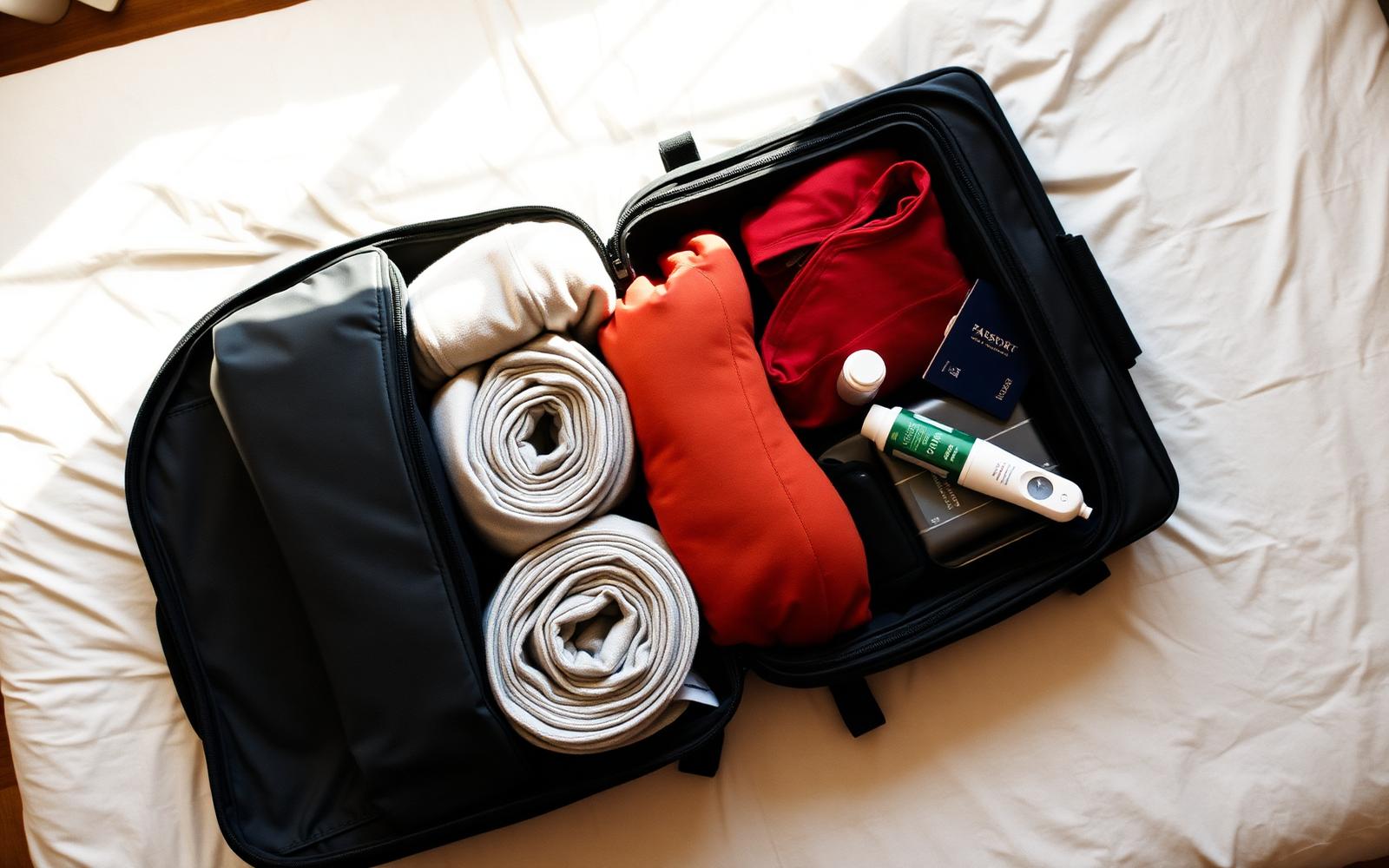
Three t shirts or tops, merino or synthetic. Two long sleeve layers. One pair of trousers worn, one packed. One pair of shorts or a skirt. Five pairs of underwear, five pairs of socks. One warm mid layer such as a light fleece. One waterproof shell that packs into its own pocket.
One pair of shoes worn, usually trainers you can walk fifteen kilometres in. One pair of light sandals or flip flops, which double as shower shoes and weigh about 200 grams.
Add for cold weather: thermal leggings and a thermal top, gloves, a hat. That is 400 grams and it turns a summer list into a winter list.
Toiletries
Liquids must fit in a one litre clear bag, each container 100 millilitres or less. Solid versions remove the problem entirely.
Solid shampoo bar, £6, lasts about three months. Toothpaste tablets. A small deodorant. Sun cream in 100 millilitre size, refilled as you go. A razor. A microfibre towel, £12, dries in two hours.
Medicines in original packaging with the prescription if it is prescribed. Paracetamol, ibuprofen, rehydration salts, plasters, antihistamine, and any personal medication for the whole trip plus a week.
Electronics
Phone, charger and cable. A 10000 mAh battery pack, which must go in the cabin, never in the hold. A universal adapter with two USB ports, £15. Headphones. A short extension lead is a surprising winner in hostels where the only socket is behind the bed.
Anything else is optional. A laptop only if you work. A camera only if you use it properly, because a phone camera is now better than a mid range compact.
Documents
Passport with at least six months of validity beyond your return date. Many countries refuse entry otherwise, and airlines will not board you.
Printed copy of the first night booking and the return ticket, because immigration desks ask and phone batteries die. Insurance policy number written on paper. A photocopy of the passport photo page stored separately from the passport itself. Two spare passport photos, which cost £6 at home and £15 at a border.
Packing method
Roll clothes rather than fold. It saves about 20 percent of the space and creases less.
Use two packing cubes, one for clean and one for worn. That single habit keeps a bag tidy for months.
Wear the heaviest items on the plane. Boots, jacket and the thick jumper. Nobody weighs what you are wearing.
Keep a small day bag folded inside the main bag. On budget airlines that count total pieces, it goes inside the big bag at boarding and comes out afterwards.
What to leave at home
Jeans, because they are heavy and take two days to dry. A hairdryer, because rooms have them or you do not need one. Full size books, though a paperback swapped at a hostel shelf is fine. More than one bottle of anything. Anything you are keeping for a special occasion that has not happened on your last three trips.
The receipt
The list below is the cost of building the kit from nothing, in 2026 UK prices. Most of it lasts several years, so on a per trip basis it is small. If you already own clothes and a bag, the real spend is closer to £60.
Laundry on the road
Budget £4 to £6 for a service wash by weight in most of Europe and Asia. In Portugal a five kilogram wash and dry is €7. In Vietnam it is about 60p a kilogram.
Between service washes, rinse underwear and one top in the sink at night. Merino dries by morning. Cotton does not, which is the whole argument for merino.
Airline size limits worth checking
Cabin rules are not standard and this is where most people get caught. Ryanair allows a small bag of 40 by 20 by 25 centimetres free, and a 10 kilogram cabin bag costs extra. easyJet gives 45 by 36 by 20 centimetres free. Wizz Air allows 40 by 30 by 20 centimetres free. British Airways is generous at 56 by 45 by 25 centimetres plus a personal item. Most Asian carriers cap cabin weight at 7 kilograms and they do weigh bags at the gate on busy routes.
Buy for the smallest airline you plan to fly, not the largest. A 40 litre bag that fits Ryanair fits everything else, and you never pay a gate fee of 45 pounds for the privilege of learning that.
Liquids, security and the things they take off you
The liquid rule is still one clear bag of one litre with nothing over 100 millilitres at most airports, even where new scanners are installed, because the rollout is uneven. Solid shampoo bars, toothpaste tablets and a solid deodorant remove the problem entirely and free up the bag for sun cream.
Items that get confiscated most often are corkscrews, nail scissors over six centimetres, multitools, and lighters in some countries. Power banks must go in the cabin, never in checked luggage, and anything over 100 watt hours needs airline approval. Keep the power bank, medication and one change of clothes in the small bag under the seat, so that even if your cabin bag is gate checked on a full flight, you land with everything that matters. The rest of the trip prep is in the international trip planner.
Frequently asked questions
Is 40 litres enough for three months? Yes. Length of trip does not change the list because you wash clothes every four or five days regardless.
What about the liquid rules in 2026? Some airports now have scanners that allow larger liquids, but the rollout is uneven. Pack to the 100 millilitre rule and you will never be caught out.
Can I take a razor in hand luggage? Safety razors are fine with the blade removed at most airports, disposable razors are fine, straight razors are not. Nail scissors under six centimetres are usually allowed.
Will I be stopped for having no checked bag? No. You will be through the airport twenty minutes faster and your bag will never be lost.
What is the heaviest item people carry needlessly? Shoes. Every extra pair is 700 grams to a kilogram. Two pairs total is the limit.
How do I handle formal clothes? One shirt or one simple dress in a synthetic that does not crease, worn with the trousers you already packed. That covers restaurants, temples and any office you need to visit.
Packing is the last step. The first steps are in how to plan an international trip, and the money side is in how to create a travel budget that works.
Before you fly, read how to stay healthy while travelling abroad for the jabs, kit and food rules that keep a trip on track.