

Yes, you can visit China for up to 10 days without a visa. The 240 hour visa free transit rule lets travellers from the UK and more than 50 other countries enter China with no visa and no fee, as long as you arrive from one country and leave to a different one. You do not visit an embassy, you do not pay a visa fee, and you do not wait weeks for approval.
Key takeaways
The 240 hour visa free transit rule gives you up to 10 days in China with no visa and no fee
You must arrive from one country and depart to a third country
UK passport holders qualify, along with citizens of more than 50 countries
You can travel across most of China during the 10 days, not just one city
Your passport needs 3 months of validity left and you need a confirmed onward ticket
What the China 240 hour visa free transit rule actually gives you
China expanded its visa free transit scheme in late 2024, raising the allowed stay from 144 hours to 240 hours. That is 10 full days, counted from midnight on the day after you arrive. You get ten days to explore one of the largest countries on earth, and it costs you nothing in visa fees.
This is a transit rule, not a tourist visa. China wants travellers passing through on long haul routes to stop and see the country instead of sitting in an airport lounge. A stop in Beijing or Shanghai turns a London to Sydney flight into a free holiday, and you can visit several cities inside the 10 days.
Who can use the 240 hour visa free transit
Citizens of the UK qualify, and so do citizens of the United States, Canada, Australia, New Zealand, and most of Europe. The full list covers 54 countries. You need a passport valid for at least 3 months after you arrive, a confirmed ticket to a third country departing within 240 hours, and an arrival country that differs from your departure country.
A trip from London to Beijing to London does not qualify, because you arrive from the UK and leave to the UK. A trip from London to Beijing to Tokyo does qualify. A trip from London to Shanghai to Hong Kong also qualifies, because Hong Kong counts as a separate region for this rule.
Which cities and regions you can visit
The scheme covers 24 provinces and regions, which in practice means almost everywhere tourists go. Beijing, Shanghai, Guangzhou, Shenzhen, Chengdu, Xi'an, Hangzhou, and Chongqing are all inside it, and you can land in one city and leave from another.
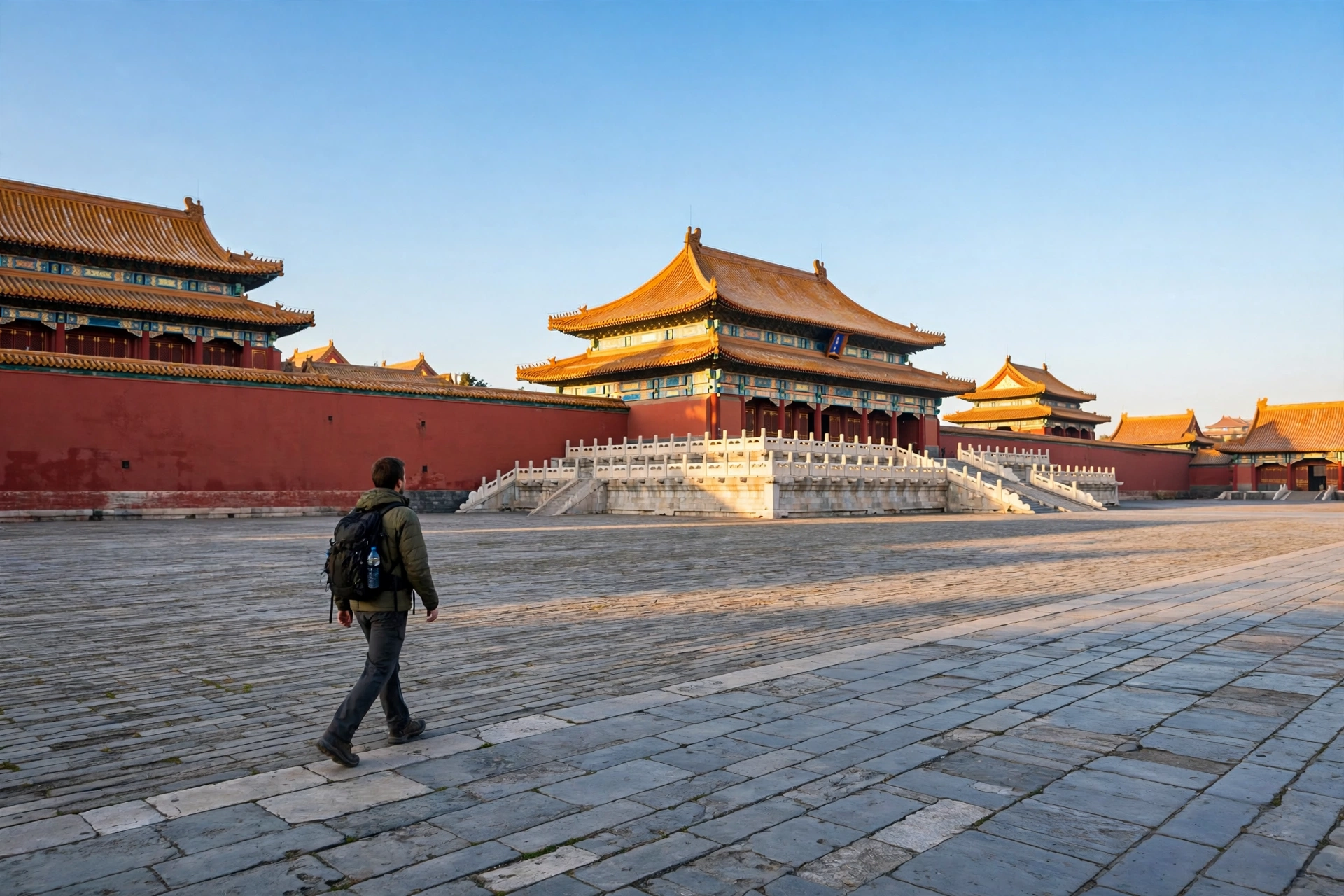
How to use the 240 hour visa free transit step by step
Step 1: Book flights that transit through China
Book a route with China in the middle and two different countries at the ends. London to Beijing to Bangkok works. London to Shanghai to Sydney works. Your onward flight must leave within 240 hours of arrival, and the clock starts at midnight after the day you land.
Step 2: Tell the airline before you fly
When you check in, tell the airline staff you are travelling under the 240 hour visa free transit rule. They check your onward ticket and passport, then note it on your booking. Some airlines still ask for a visa out of habit, so carry a printout of your onward ticket and know the rule by name.
Step 3: Fill in the arrival card and use the transit lane
On the plane or at the airport, fill in the temporary entry form with your hotel address for the first night, your onward flight details, and your passport number. At the airport, look for the signs for 24, 144 or 240 hour transit, or ask an officer. Do not join the normal visa holder queue. The officer checks your documents and stamps you in. The whole process usually takes 10 to 20 minutes.
Step 4: Register where you stay
Every foreign visitor must register their address within 24 hours of arrival. Hotels do this automatically when they scan your passport at check in. If you stay in an apartment or with a friend, you must register at the local police station yourself, so book a hotel for at least your first night.
What a 10 day China stopover really costs
The visa costs nothing, and China is still one of the cheapest big countries to travel in. Here is a realistic daily budget for 2026.
| Expense | Budget per day | Notes |
|---|---|---|
| Dorm bed or budget hotel | £12 to £25 | Cheaper still in Chengdu |
| Food | £8 to £15 | Street food and local places |
| Metro and buses | £1 to £3 | Metro rides cost pennies |
| High speed train | £15 to £40 per trip | Beijing to Xi'an is about £35 second class |
| Sights and entry fees | £5 to £15 | The Great Wall and the Forbidden City are under £10 each |
| Total per day | £26 to £58 | A 10 day stopover runs about £260 to £580 |
A 10 day stopover in China can cost less than a long weekend in Paris.

Where to spend your 10 days
The classic first timer: Beijing, Xi'an, Shanghai
Spend 4 days in Beijing for the Great Wall, the Forbidden City, and the hutong lanes. Take the high speed train to Xi'an for 2 days to see the Terracotta Army and eat your way through the Muslim Quarter. Finish with 3 days in Shanghai for the skyline, the old French Concession streets, and the street food.
The slow route: one city, done properly
Stay in one place for the full 10 days. Shanghai alone rewards a slow stay: day trips to Suzhou and Hangzhou by fast train, neighbourhood markets, and time to learn the metro and the food apps. Slow travel suits the rule well because you never rush and never risk missing your onward flight.
Common mistakes that get people turned away
The most common mistake is booking a return to the same country. London to Beijing to London fails the third country rule, and the airline will refuse to board you. The second mistake is an unconfirmed onward ticket: a flight you have not paid for, or a booking without a ticket number, does not count.
The third mistake is cutting the timing too fine. Leave a buffer of at least a day between your plans and the deadline, because an overstay can mean a fine and a ban on future visa free entry. The fourth mistake is an almost expired passport. China wants 3 months of validity left on arrival, so check your passport the day you book, not the day you fly.
Practical tips for a smooth 10 days
Download a translation app and an offline map app before you land. English is thin outside big hotels and tourist sights. Bring cash in yuan for small vendors, even though cities run on phone payments. Buy a local SIM or an eSIM before you fly so you have data from the moment you land.
The flight time calculator helps you land in daylight, and the time zone converter keeps your onward connection times straight across 8 time zones from London. Pack light for the trains: a 40 litre bag covers 10 days easily if you plan laundry stops.
Is the China 240 hour visa free transit worth it?
Yes, for most travellers flying between Europe and Asia or Oceania. You get 10 free days in a country that usually charges UK citizens more than £150 for a visa and makes them visit an application centre in person. You see the Great Wall, eat food you cannot find at home, and ride the fastest trains on earth. Ten days in China for the price of a connection is the best deal in budget travel right now.
If your onward flight heads east, read our guide to Japan tourist taxes in 2026, and check the latest UK Foreign Office travel advice for China before you fly.
FAQ
Do UK citizens need a visa for China in 2026?
No visa is needed for stays up to 10 days under the 240 hour visa free transit rule. You must arrive from one country and leave to a different country, with a confirmed onward ticket. For longer stays, you still need a visa.
Does the 240 hour visa free transit work for a return flight to the UK?
No. The rule requires you to leave China for a third country, so a London to Beijing to London trip does not qualify. Route it as London to Beijing to Tokyo, Bangkok, Hong Kong, or any other country and the rule applies.
How is the 240 hours counted?
The clock starts at midnight on the day after you arrive. Land on a Monday and your 240 hours run from Tuesday at midnight until the following Friday at midnight: 10 full days plus the rest of arrival day.
Can I travel to more than one city in China on the 240 hour transit?
Yes. You can move freely between the provinces covered by the scheme, which includes Beijing, Shanghai, Xi'an, Chengdu, Guangzhou, and most major cities. You can arrive in one city and leave from another.